
I have an active household, with two teenage boys (and myself) that love biking, Nordic skiing and running; we go through a lot of drink mixes. Our kitchen can sometimes look like a laboratory, with various powders, scales and concoctions strewn about in the name of science. OK, maybe that is putting too much weight on a beverage, but getting the right balance of electrolytes and carbs can make or break your next endurance race or long training event. My wife might tell you that I tend to go off the deep end for certain things like biking, ski waxing or, in this case, drink mixes for training and racing. The result of this deep dive is this lengthy blog post, but I think it will be worth it. In addition to my personal quest for hydration glory, my two sons also have unique needs that prompted even further investigation. One of my sons has been diagnosed with a condition called neurocardiogenic syncope (NCS). Basically, he experiences a sudden drop in blood pressure causing him to faint. While NCS is a different disorder than POTS (Postural Orthostatic Tachycardia Syndrome), they are both a form of dysautonomia, can have similar symptoms, and in both cases one of treatments is usually to increase salt intake. My other son has always dealt with stomach issues, and finally after many tests, we found out that he has a low level of the enzyme sucrase-isomaltase, making it difficult to digest sucrose (table sugar). In rare cases, there may be a complete absence of the enzyme in which the condition is called CSID (Congenital Sucrase-Isomaltase Deficiency). For him, this is unfortunate, since many sports drinks and snacks use sucrose. It all made sense why he would get bad stomach aches during intense activity. What we thought was related to the activities themselves, was actually related to the stuff he was eating and drinking prior to and during those activities.
This is where I need to mention I am not a doctor or nutritionist, and if you are questioning any of this it would probably be best to consult a professional. OK, that is out of the way, lets dive in. I am going to break this up into two main parts: electrolytes and carbohydrates, then bring them back together in the end.
Let’s start with electrolytes. Electrolytes are minerals that our bodies use to help maintain fluid balance, muscle contractions and nerve function. The most common electrolytes are sodium (Na), magnesium (Mg), potassium (K) and calcium (Ca). Most of the time we get enough of these minerals in our everyday life that we don’t need electrolyte infused beverages and we can just drink water. However, if there is a lot of sweat loss due to heat, exertion or illness then replenishing your electrolytes might be needed. Also, as mentioned above, an increase in sodium can be beneficial to treat the symptoms of POTS and NCS, by increasing blood pressure. Be sure to meet with a doctor if you think you have either of these conditions.
In our electrolyte mix, the main focus is on sodium since the majority of electrolytes lost through sweat is in the form of sodium chloride. I still include magnesium, potassium and calcium as well. There are different ways to get these electrolytes too. Some options for sodium include sodium chloride (table salt) and sodium citrate. Sodium chloride is cheap, easily available and has that distinct salty taste, while sodium citrate doesn’t have a strong salty flavor, is more expensive and some people don’t care for the almost tangy flavor of it. I actually prefer the salty flavor of table salt. For magnesium, I use magnesium malate which is one of the forms that is less disruptive to the stomach. Avoid magnesium citrate as its primary use is a laxative! For potassium I use potassium citrate and for calcium I use calcium citrate. Now let’s put it all together. Note that the amounts of the compound are different than the amount of mineral you get, this is because not all of sodium chloride is sodium, in fact only 40% is sodium. So to get 1 gram of sodium, you need to ingest 2.5g of sodium chloride.
1 Liter Electrolyte Drink
- 2.5 g sodium chloride (1000 mg sodium)
- 1.25 g magnesium malate (200 mg magnesium)
- 0.25 g potassium citrate (100 mg potassium)
- 0.75 g calcium citrate (165 mg calcium)
Note that calcium citrate is not very soluble, in fact, only about 1 gram will dissolve in 1 liter of water. If more than a gram is added it will likely just settle to the bottom and get dumped out later. This mixture can be consumed as it is, or if desired add some lemon juice, or a flavor packet such as Welches or Crystal Light. That is the stand alone electrolyte drink, similar to what you could buy already made for you. If buying a pre-done mix is more your style there are several options. Two of them that I have used and fully endorse are LMNT and Venture Pal.
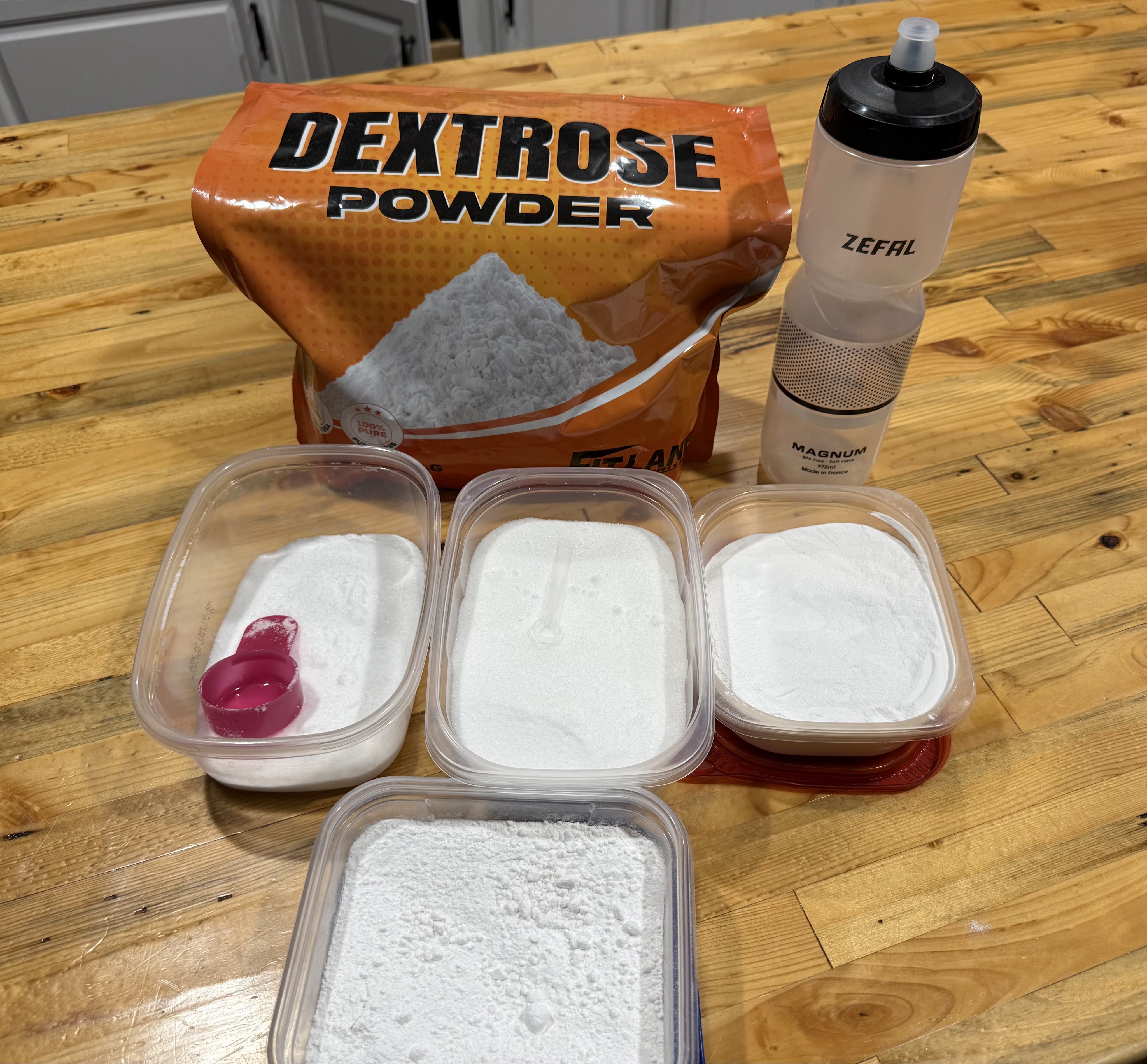
Now let’s get into carbohydrates. When we talk about carbohydrates for endurance athletes we are not talking about a big bowl of alfredo before the fun run like Michael Scott. For us, we are talking about sugar, however sugar is not as simple as you thought, pun-intended.
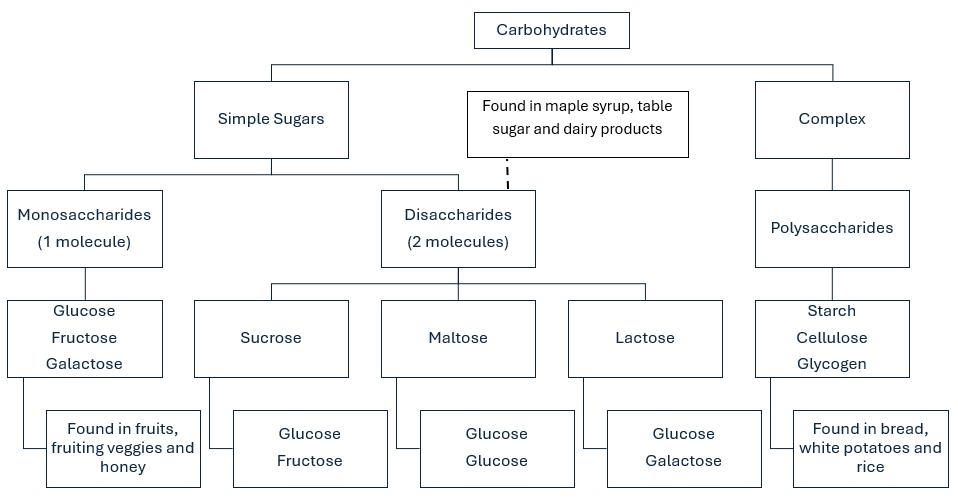
Carbohydrates can be broken down into two groups: Complex which are also called polysaccharides and simple sugars which have two groups, monosaccharides and disaccharides. Monosaccharides include glucose (dextrose) and fructose and galactose. Disaccharides include sucrose, maltose and lactose, which have to take another step to break down into glucose, fructose and galactose. Another popular substance used in carbohydrate drinks is maltodextrine. This is technically a polysaccharide, but it breaks down rapidly into glucose. For most people this may be a good option, but unfortunately, it requires the same isomaltase enzyme that my son is deficient in. For this reason I stick to straight glucose and fructose. Glucose absorbs nearly instantly, giving us a burst of energy quickly, while fructose needs to be converted to glucose by the liver first, so it has a “metering out” effect. More science is coming: Our bodies use something called transporters to absorb glucose and fructose and there is a limit to how quickly we can absorb them. Fortunately, there is a different transporter used for glucose than fructose, meaning we can manage each of them separately in order to maximize the amount of total absorption. Research has also shown that the optimum ratio of glucose to fructose is 2:1 and furthermore the maximum absorption rate is a bit over 100 grams per hour. However, more than 90 g/h and an upset stomach can occur, therefore 90 g/h is considered a safe maximum. This doesn’t mean that 90 g/h is required for all activities. A rough guideline for activities and required carbs is as follows:
- 1-1.5 hours: 30 g/hour
- 1.5-2 hours: 60 g/hour
- 2+ hours: 90 g/hour
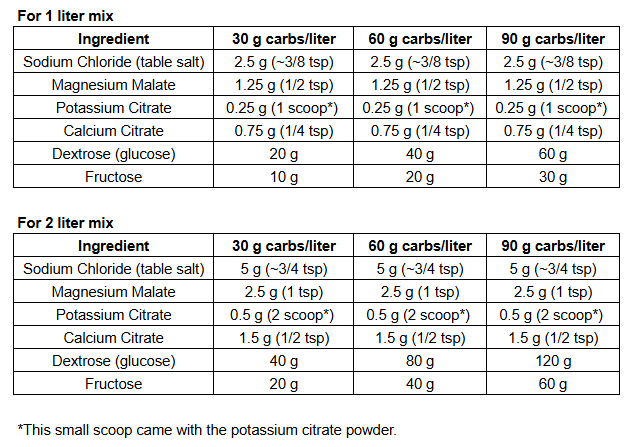
Now it’s time to put it all together. In order to simplify things as much as possible I organized a chart with two different volume sizes: a 1 liter bottle and a 2 liter jug or hydration bladder. Each of those can be filled with either a 30, 60 or 90 gram dose of carbs depending on your activity. Additionally, I added the electrolyte ingredients to this chart as well. What about flavor you may ask? Just imagine the Kool-aid man smashing through that brick wall. When making a 2 liter batch a packet of original Kool-aid flavor is perfect. There are many flavors to choose from and the dextrose/fructose take the place of the sugar. Even when I’m not needing to take 2 liters with me on the activity, I will often make a 2 liter jug and keep it in the fridge for convenience.
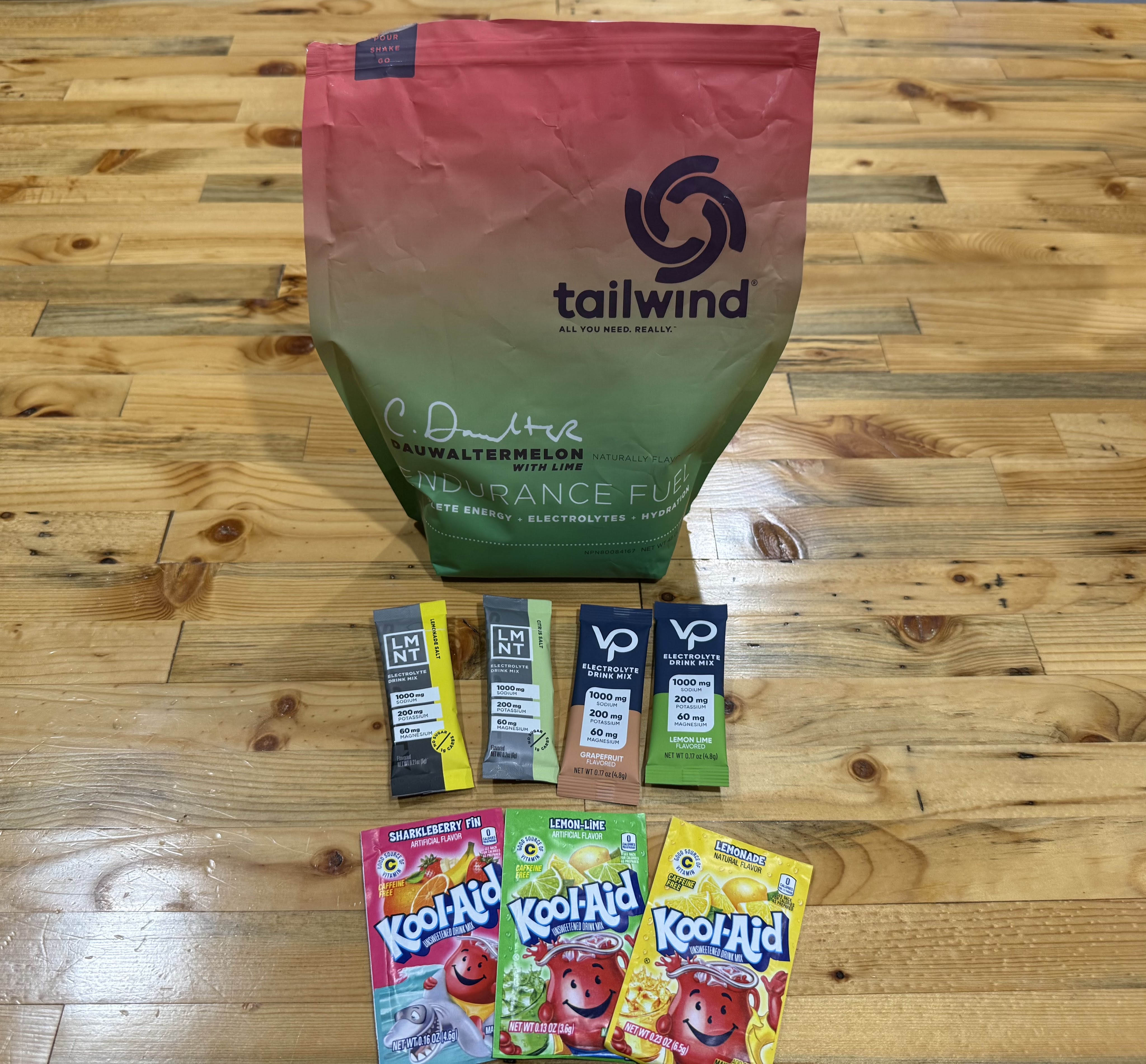
Just like the electrolyte mix, there are also carb mixes that are available, and sometimes it is easier to buy pre-made powder. The advantage of making it yourself aside from long term cost savings, is that electrolytes and carbs can be combined into one. If looking for an option to purchase I would recommend Tailwind, it comes in many flavors and is what powered me through the Lutsen 99er, before I went down the drink mix rabbit hole.
Below is a complete list of all the ingredients and products that I have mentioned. Please note that these are affiliate links, meaning that if you click and purchase through these links, I may get a small commission at no cost to you, however I would never recommend something that I have not personally used and trust.
Electrolyte Ingredients and Products
Carbohydrate Ingredients and Products
Other Stuff
Thank you for sticking with me on this lengthy but important post. If you found it beneficial or just interesting, please consider sharing it.
Sources


 silent sports